Soccer, Politics And The Cultural Catholicism Of UK’s New Prime Minister
Stressing that American Catholics have “come of age,” he argued that post-Vatican II Catholic leaders now understand that Catholic politicians have to live and work in the real world. Let’s keep reading:
The parallel I want to draw here is not between or among what we Catholics believe to be moral wrongs. It is in the Catholic response to those wrongs. Church teaching on slavery and abortion is clear. But in the application of those teachings — the exact way we translate them into action, the specific laws we propose, the exact legal sanctions we seek — there was and is no one, clear, absolute route that the Church says, as a matter of doctrine, we must follow. …
With regard to abortion, the American bishops have had to weigh Catholic moral teaching against the fact of a pluralistic country where our view is in the minority, acknowledging that what is ideally desirable isn’t always feasible, that there can be different political approaches to abortion besides unyielding adherence to an absolute prohibition.
This is in the American-Catholic tradition of political realism. In supporting or opposing specific legislation the Church in this country has never retreated into a moral fundamentalism that will settle for noting less than total acceptance of its views.
But Cuomo kept insisting that, as a Catholic, he accepted the churches teachings and would strive to honor them in his own life. This did not, however, mean that he could not — in the political arena — make choices that he said represented the views of his voters.
In other words, he was “personally opposed, but ….” Also, in the evolving Vatican II faith, individual Catholics were often told that they needed to “follow their conscience” when making personal decisions about tough issues (such as contraception).
Cuomo seemed to be arguing that a Catholic could accept doctrines, and even practice them in their own lives, while taking part in political coalitions that worked toward centrist compromises in public life.
However, decades later, then Vice President Joe Biden moved from words to personal deeds by officiating at the 2016 same-sex marriage rite for two White House staffers, Brian Mosteller and Joe Mahshie. And in 2022, President Biden openly supported same-sex marriage.
When U.S. bishops said the Respect for Marriage Act didn’t include adequate protection for faith groups that opposed gay marriage, Biden simply said, “I disagree.” It was time, he said, for the church to accept that the culture had changed.
At the same time, Biden remained active in Catholic sacraments, with or without news cameras nearby — with his favorite rosary in his pocket. His supporters always called him a “devout,” “active” Catholic. He was practicing his own approach to Catholic doctrine.
What about the new occupant of 10 Downing Street?
In an Associated Press audio report on this topic, the veteran British religion-beat professional Ruth Gledhill, now the assistant editor of The Tablet, noted:
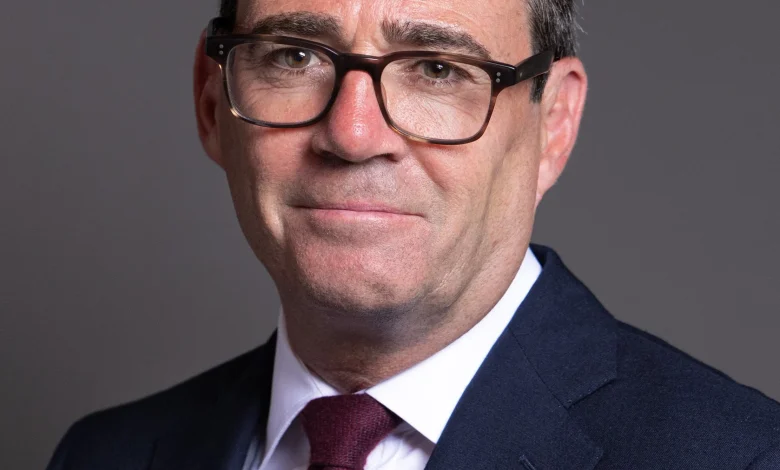
“Andy Burnham is the first who was, baptized a Catholic, was an altar boy, grew up in the Catholic Church. but I wouldn’t say that he’s necessarily a regular Mass going Catholic now. So some people might describe him as more of a cultural Catholic, and certainly in some aspects the Catholic Church’s teaching I know there are some Catholics that would find him in opposition.”
A lengthy feature from Religion News service backed that up.
Burnham, 56, has said he was shaped by the Catholic Church. Last year, he spoke of its influence during his lecture for the religion-meets-politics think tank, Theos. He told the audience there is a need to move from a crisis of trust to “a culture of encounter,” a phrase he attributed to the late Pope Francis. …
During his first campaign to secure the Labour leadership in 2010 — he lost to Ed Miliband — Burnham was interviewed by The Tablet, the Catholic weekly. “My mother was not religious in any showy way,” he told The Tablet. “I am like her in that, to use a Scouse (Liverpudlian) phrase, we don’t lick the altar steps.”
But what has clearly profoundly affected Burnham is the body of theology known as Catholic social teaching. Acknowledging the importance of individual responsibility, Catholic social teaching focuses on the importance of the common good and people working together toward it.
When push comes to shove, will Burnham argue that he is a “Pope Francis“ Catholic?
That will get complicated when he points to the Catholic Catechism on economic issues linked to the poor, immigrants and the dignity of human beings at all stages of life — yet fails to apply the same doctrines to other moral issues in modern Britain.
The RNS feature hinted at one specific issue to watch — euthanasia.
Burnham has also indicated he has difficulties with some aspects of Catholic teaching, particularly personal sexual morality. In 2015, in an interview with Premier Christian News, he said he had issues with its teaching on contraception and homosexuality, describing it as developing “a more judgmental mode” under Pope Benedict XVI. But he went on to say that “Catholic social teaching underpins my politics.”
Catholic leaders will no doubt watch how the new prime minister might deal with contentious issues such as assisted dying, considered anathema to the Catholic Church, or funding for faith schools.
Stay tuned. The new prime minister will almost certainly have a short political honeymoon. How will he handle his first public meeting with Pope Leo XIV? In terms of symbolism, will he seek a blessing?
Credit: Source link